
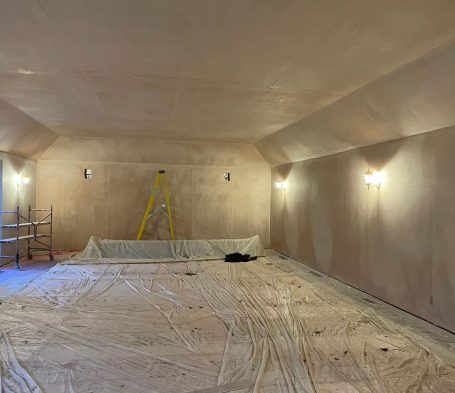
Internal and External Plastering
Internal Plastering
Definition: Internal plastering refers to the application of plaster on the interior surfaces of walls and ceilings. It provides a smooth and firm finish, acting as a thermal insulator and fire protection layer.
Materials Used: Common materials include cement, sand, and water, often mixed in a ratio of 1:6 (cement to sand) for internal walls. Gypsum plaster and lime plaster are also used for specific applications.
External Plastering
Definition: External plastering is the application of plaster on the outer surfaces of buildings. It protects the structure from weather elements and enhances aesthetic appeal.
Materials Used: Similar to internal plastering, but often a stronger mix is used, such as 1:4 (cement to sand), to withstand external conditions. Waterproofing compounds may also be added for additional protection.
Key Differences
Purpose: Internal plastering focuses on aesthetics and insulation, while external plastering emphasizes protection against environmental factors.
Material Ratios: The mix ratios for external plastering are generally stronger to withstand weather conditions compared to internal plastering.